
Article: How Much Do Aircraft Detailers Make? Real Income Numbers for 2026
How Much Do Aircraft Detailers Make? Real Income Numbers for 2026
Updated October 2026 · By Brett Berry, founder of Shiny Jets
Aircraft detailers typically earn $18–$28 an hour working for a company and $75–$150 an hour as independent operators, based on Shiny Jets estimates. A solo operator often makes $40,000–$70,000 in year one, and established operators with recurring clients reach $80,000–$130,000. In 2026, one Shiny Jets graduate was offered a $120,000-a-year staff job.
The figures below are Shiny Jets estimates from 15 years in the trade and from working with our graduates. They are not survey data. Your results will depend on your market, effort and execution.
Aircraft detailing pays significantly more than automotive detailing for the same physical effort. How much you earn depends heavily on how well you were trained and how many services you can offer. Here are the numbers we see.
How much do aircraft detailers make per hour?
| Role | Typical hourly rate |
|---|---|
| Entry level, working for a company | $18–$28 per hour |
| Independent detailer | $75–$150 per hour |
| Specialist services (brightwork polishing, ceramic coatings) | $100–$200 per hour |
How much do aircraft detailers make per year?
| Business stage | Typical annual income |
|---|---|
| Solo operator just starting out | $40,000–$70,000 in year one |
| Established solo operator with recurring clients | $80,000–$130,000 |
| Owner with one employee | $100,000–$180,000 |
| Multi-crew operation with FBO contracts | $200,000+ |
Can you earn a salary as an aircraft detailer?
Yes. Not every trained detailer starts a business. Flight departments and aircraft owners also hire staff detailers. In 2026, one Shiny Jets graduate was offered a $120,000-a-year staff position detailing a major tech company's private jets. Salaried roles like that go to people who can show real training and work to a documented standard.
Why does aircraft detailing pay more than auto detailing?
Aircraft owners are high-net-worth individuals who prioritize quality over price. A Cessna owner might pay $300 for a full wash and wax; the same job on a car pays $80. A full detail on a large cabin jet pays $3,000 to $8,000; the same job on an SUV pays $300 to $500. The knowledge barrier keeps competition thin, and most markets have more demand than qualified detailers.
What affects your income?
- Aircraft size and type: larger aircraft mean more hours and higher revenue per job
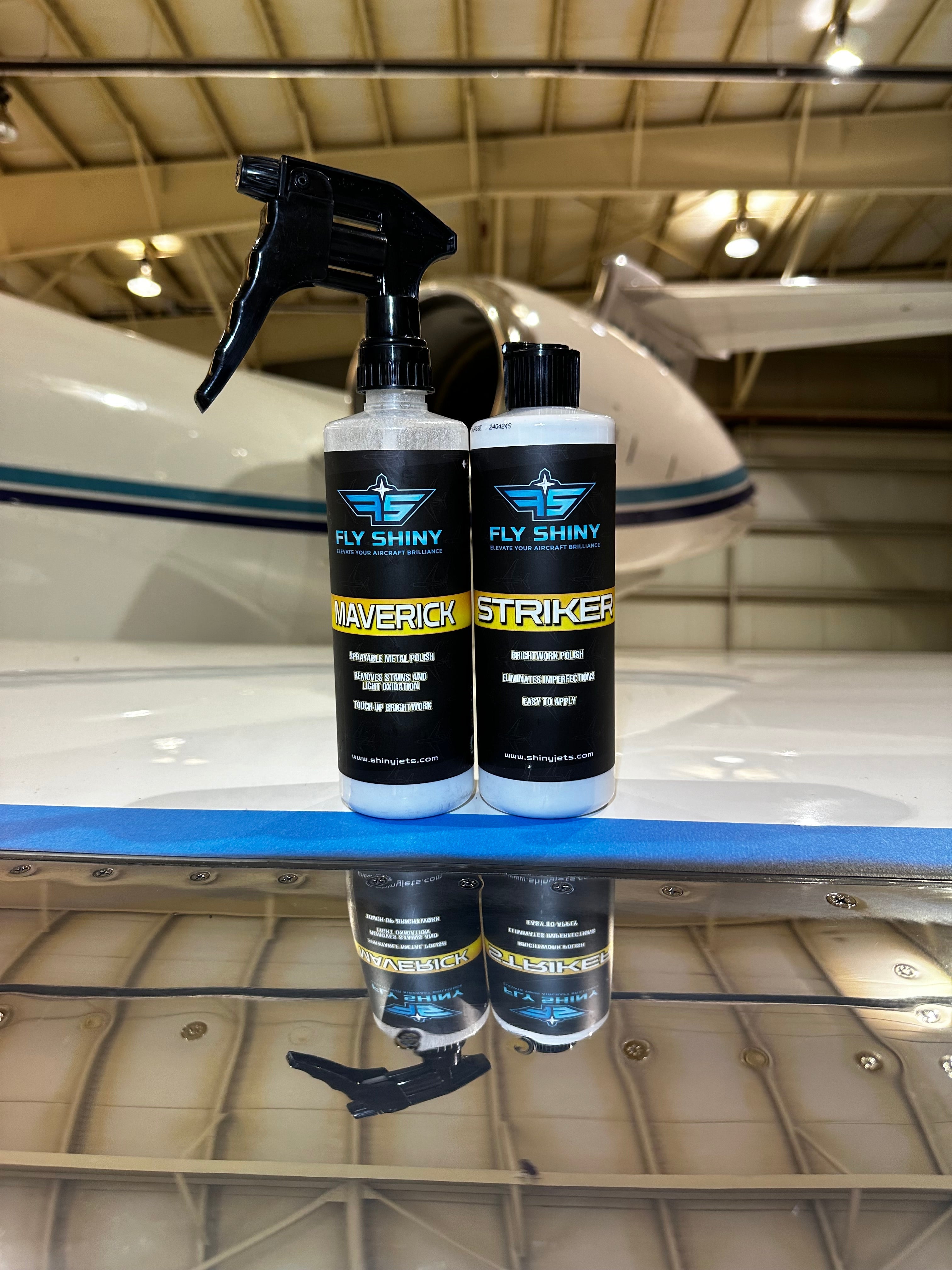
- Service mix: ceramic coatings and brightwork polishing have the highest margins
- Recurring clients: monthly maintenance agreements create predictable income
- Training depth: trained, certified detailers can charge more and win more FBO referrals. This is where most people leave money on the table.
Why are ceramic coatings the highest-margin service?
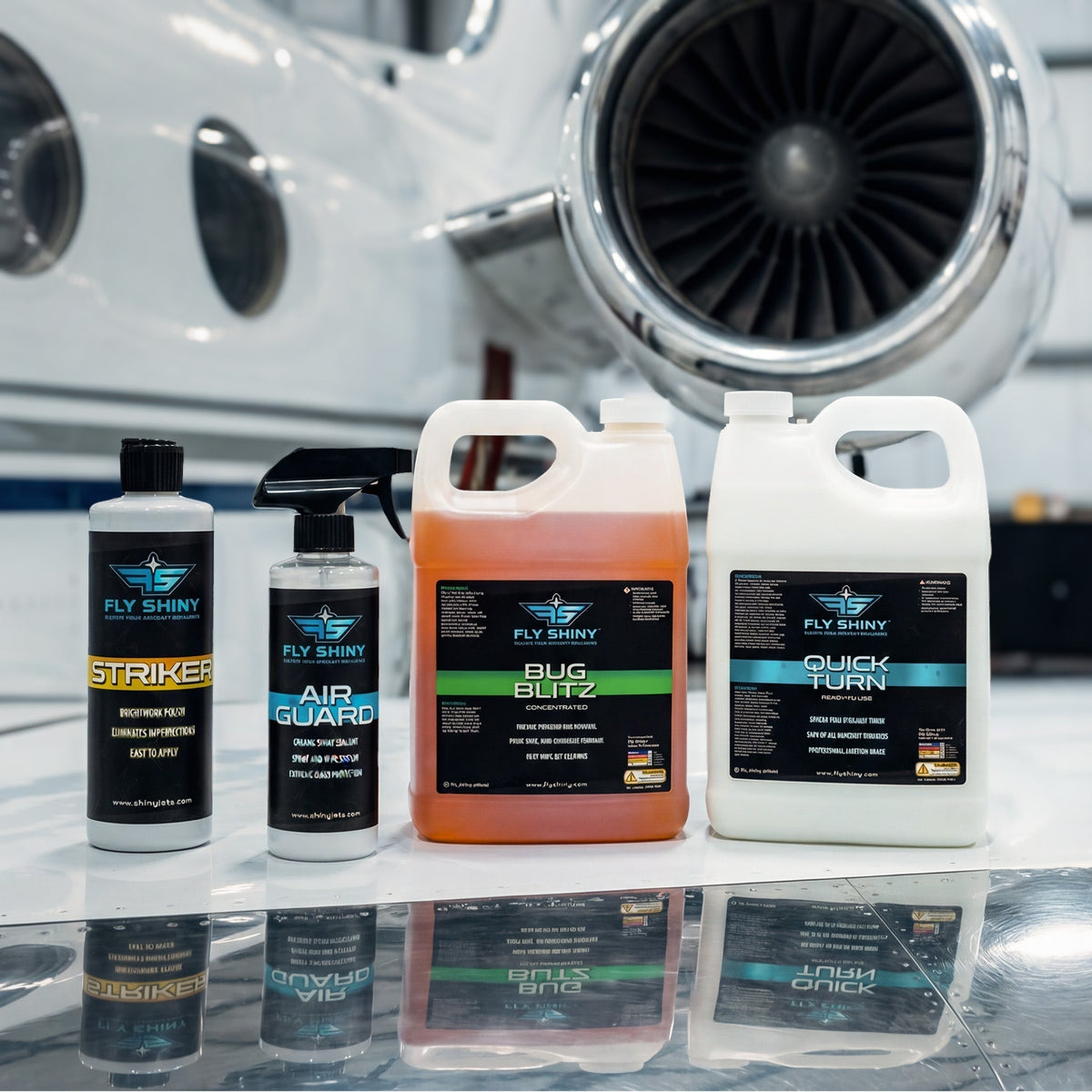
Ceramic coating is one of the most profitable services you can offer. It is a high-ticket job, it is mostly skilled labor, and owners who coat their aircraft come back for maintenance. If you are not offering ceramic coatings, you are leaving the highest-margin work on the table. (We use Fly Shiny Pro Ceramic Coating; see our ceramic paint protection service.)
It is also why training pays back fast: many of our students recoup their training cost in 2–3 jobs, and sometimes with a single ceramic coating job.
Why does incomplete training cost you more than you think?
If you go through a basic training program, you will leave with gaps in your service menu. Every service you cannot offer is an opening for a competitor to walk in and take your client. An aircraft owner who needs brightwork polishing, ceramic coating and interior leather work wants one qualified detailer they can trust, not three different vendors. If you can only do two of those three services, you can lose that client relationship to someone who can do all of them.
The return on comprehensive training comes faster precisely because you can say yes to every job. More services per client means higher ticket values, fewer clients needed to hit your income goals, and less competition able to replace you. Shiny Jets training programs are built to make you a complete detailer, not just someone who can wash an airplane. If you're weighing the cost, read Is aircraft detailing certification worth it?
How quickly can you hit $100K?
The detailers who get there fastest are the ones who came in fully trained. The keys are pricing correctly from day one using the Shiny Jets Aircraft Pricing Tool, landing 5 to 10 recurring monthly maintenance clients, and building relationships with one or two FBOs who refer walk-in work. Your results will depend on your market, effort and execution, but the opportunity is real and the demand is there. Our step-by-step guide to becoming a certified aircraft detailer covers insurance, ramp access and landing your first clients.
Frequently asked questions
How much do aircraft detailers make an hour?
Based on Shiny Jets estimates, entry-level detailers working for a company typically earn $18–$28 an hour, independent detailers $75–$150 an hour, and specialist services such as brightwork polishing and ceramic coatings $100–$200 an hour.
How much do aircraft detailers make a year?
Shiny Jets estimates a solo operator makes $40,000–$70,000 in year one, an established solo operator with recurring clients $80,000–$130,000, an owner with one employee $100,000–$180,000, and a multi-crew operation with FBO contracts $200,000 or more.
Can aircraft detailers earn a salary instead of running a business?
Yes. Flight departments and aircraft owners hire staff detailers. In 2026, a Shiny Jets graduate was offered a $120,000-a-year staff position detailing a major tech company's private jets.
What is the most profitable aircraft detailing service?
Ceramic coating is one of the highest-margin services, followed by brightwork polishing. Many Shiny Jets students recoup their training cost in 2–3 jobs, sometimes with a single ceramic coating job.
Do certified aircraft detailers earn more?
Generally, yes. Certification is a private credential, not an FAA license, but FBOs, operators and owners prefer trained, insured detailers, which leads to more vendor approvals, referrals and higher-value jobs.
Ready to start earning?
Shiny Jets training programs are designed to get you operational fast, with real pricing tools, business startup curriculum and a certified detailer directory listing that puts you in front of aircraft owners looking for qualified professionals. Book a free call to find out which program is right for you, compare the 3-Day Certification, or explore all in-person training programs.
About the author
Brett Berry has spent 15 years in aviation detailing and has cosmetically restored more than 28 warbirds. He founded Shiny Jets, the Fly Shiny product line and Shiny Jets CRM, wrote Beyond Shiny, and has been featured on the cover of InFlight USA. He trains detailers at Threshold Aviation, Chino Airport (CNO), Chino, California.

Written by Brett Berry

Leave a comment
This site is protected by hCaptcha and the hCaptcha Privacy Policy and Terms of Service apply.