
How to Choose Aircraft Detailing Training: 10 Questions to Ask
By Brett Berry, founder of Shiny Jets, Chino, CA
Choose aircraft detailing training that puts you on real aircraft, teaches aviation-specific methods rather than repurposed auto detailing, includes the business side, gives you a pricing tool, and keeps supporting you after the last day of class. Ask every program the 10 questions below before you pay, and judge it on the answers, not the marketing.
Key facts
- Must-have: hands-on work on real airframes, at a real airport, under supervision.
- Business training: pricing, insurance, ramp access and finding clients should be part of the course.
- Pricing tool: Shiny Jets training students get the Pricing App, which covers 300+ aircraft, plus 12 months of Shiny Jets CRM Business.
- After class: you should be able to reach the person who trained you.
- Shiny Jets 5-Day course: $7,500 at Chino Airport, adding dry ice cleaning, cabinet restoration, window restoration and paint wet sanding beyond the 3-Day.
Why do so many aircraft detailing graduates struggle in year one?
Most of them were trained to detail, not to run a business. Knowing how to polish a Cessna is different from building a client base, pricing a Gulfstream detail, getting ramp access at a controlled airport and closing a maintenance agreement with an FBO.
- They underprice. Without a pricing system built on aircraft labor hours, new detailers guess, and they guess low. A full detail on a King Air that should bill at $2,800 gets quoted at $800, and after one or two jobs like that the math stops working.
- They have nobody to call. A matte paint scheme, oxidized Alclad on a warbird, an insurance document they have never produced. The detailers who succeed can pick up the phone and get an answer.
- They cannot get airport access. FBOs have vendor approval processes, airports want insurance documents in specific formats, and some fields require background checks and badges.
- They have no community. Aircraft detailing is a small trade. People who build lasting businesses stay connected to other professionals.
What should you ask before you pay for aircraft detailing training?
1. Will I work on real aircraft?
Not videos, not cars, not mockups. Real airframes with real tools under supervision. If the answer is anything other than a clear yes, with details about which aircraft and where, keep looking.
2. Is the curriculum built for aviation?
Acrylic windows, painted aluminum, brightwork, de-ice boots and avionics bays need methods and chemicals with no automotive equivalent. A car detailing course with aviation content added on top is a red flag.
3. Does business training come with it?
Pricing, insurance, airport access, FBO relationships and client acquisition should be covered, not left to you after graduation.
4. Is there a pricing tool?
Ask for a quoting system built on real aircraft labor hours across many aircraft types. Shiny Jets students get the Pricing App, which covers 300+ aircraft. Read how to quote aircraft detailing jobs to see why this matters.
5. Will owners be able to find me?
Ask whether graduates get a listing that aircraft owners and FBOs can search. Shiny Jets CRM profiles power the Shiny Jets Aircraft Detailer Directory.
6. Can I reach my instructor after training ends?
This is the most important question on the list. I get calls regularly from people who trained somewhere else and could not get an answer afterward. Their questions are almost always the same: what chemical to use on a paint system, how to handle oxidation on bare aluminum, how to price the job in front of them, and how to get ramp access. I answer, and the program you pick should too.
7. Is there a community of graduates?
Shared knowledge about chemicals, methods, regional pricing and referrals is enormously valuable. Ask whether you get access to other working detailers after graduation.
8. Do you help with aviation insurance?
Aviation liability insurance is non-negotiable, and most FBOs require at least one million dollars per occurrence. Many general brokers do not understand what FBOs require from vendors, so ask for an aviation-specific broker referral.
9. What is the instructor's actual experience?
Ask how many years they have been detailing aircraft, which types they have worked on, and whether they still work in the field. Brett Berry has been detailing jets for 18 years.
10. What do graduates do after training?
Do they get FBO work, start businesses or get hired by operators? A program confident in its outcomes will have real examples.
What does Shiny Jets training include?
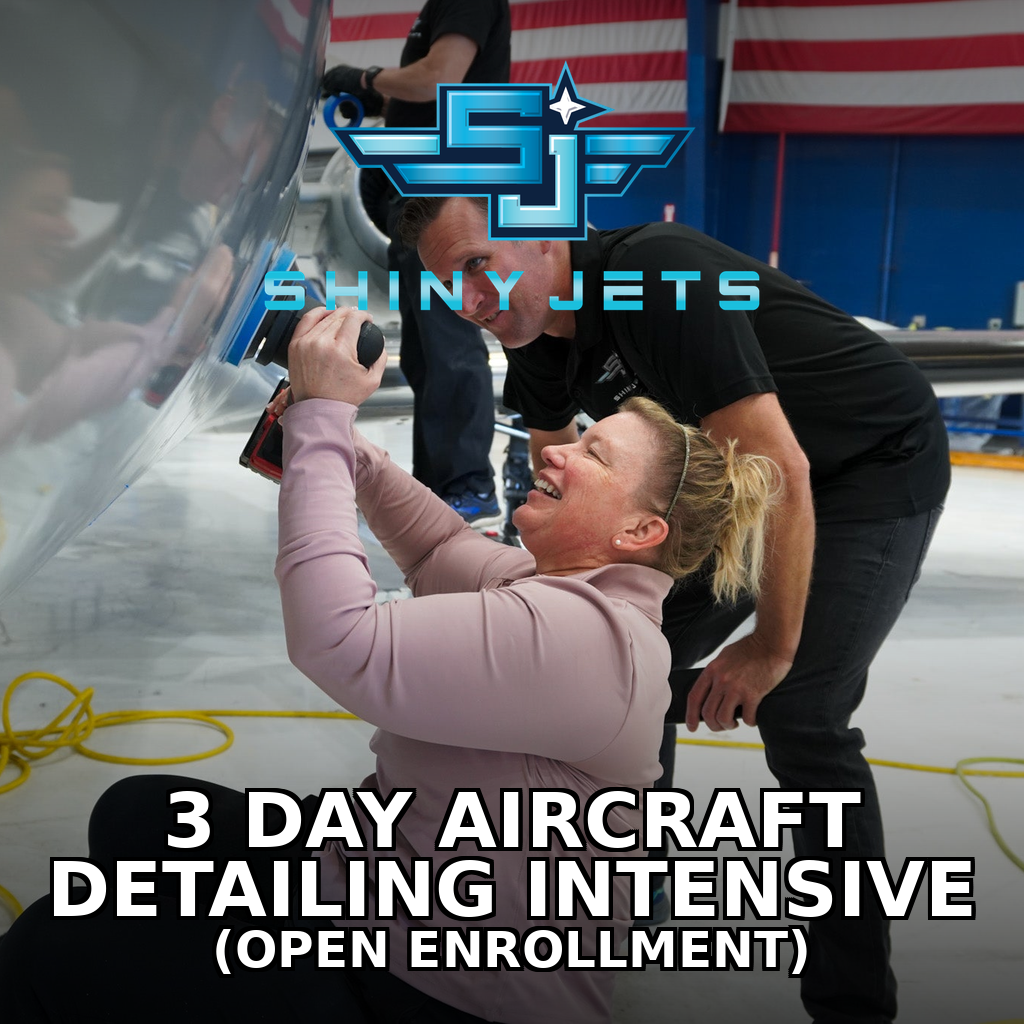
Every Shiny Jets graduate gets lifetime access to the online training portal, 12 months of Shiny Jets CRM Business plus the Pricing App, access to the Shiny Jets community of working detailers, our library of standard operating procedures, and a team that picks up the phone after class. Compare the in-person aircraft detailing training in Chino. For most new detailers, the 5-Day course is the right fit. If you are just starting out, read how to become an aircraft detailer next.
Frequently asked questions
What should I look for in aircraft detailing training?
Hands-on work on real aircraft, an aviation-specific curriculum, business training, a pricing tool, and support after the class ends.
Why do new aircraft detailers fail in their first year?
Most underprice their jobs, have nobody to call when a job gets complicated, struggle to get airport access, or work in isolation without a community.
What is the most important question to ask a training program?
Ask whether you can reach the person who trained you after graduation. The answer shows whether the program is built around your success.
Does Shiny Jets training include software?
Yes. Training students get 12 months of Shiny Jets CRM Business plus the Pricing App, which covers 300+ aircraft.
Which Shiny Jets course should I take?
For most new detailers, the 5-Day course at Chino Airport. It is $7,500 and adds dry ice cleaning, cabinet restoration, window restoration and paint wet sanding beyond the 3-Day.
About the author
Brett Berry has been detailing jets for 18 years. He founded Shiny Jets and built Shiny Jets CRM, and he trains detailers at Threshold Aviation, Chino Airport (KCNO), in Chino, CA. Call 858-267-4469.

Written by Brett Berry

Leave a comment
This site is protected by hCaptcha and the hCaptcha Privacy Policy and Terms of Service apply.